
More Than Just Bulletproof
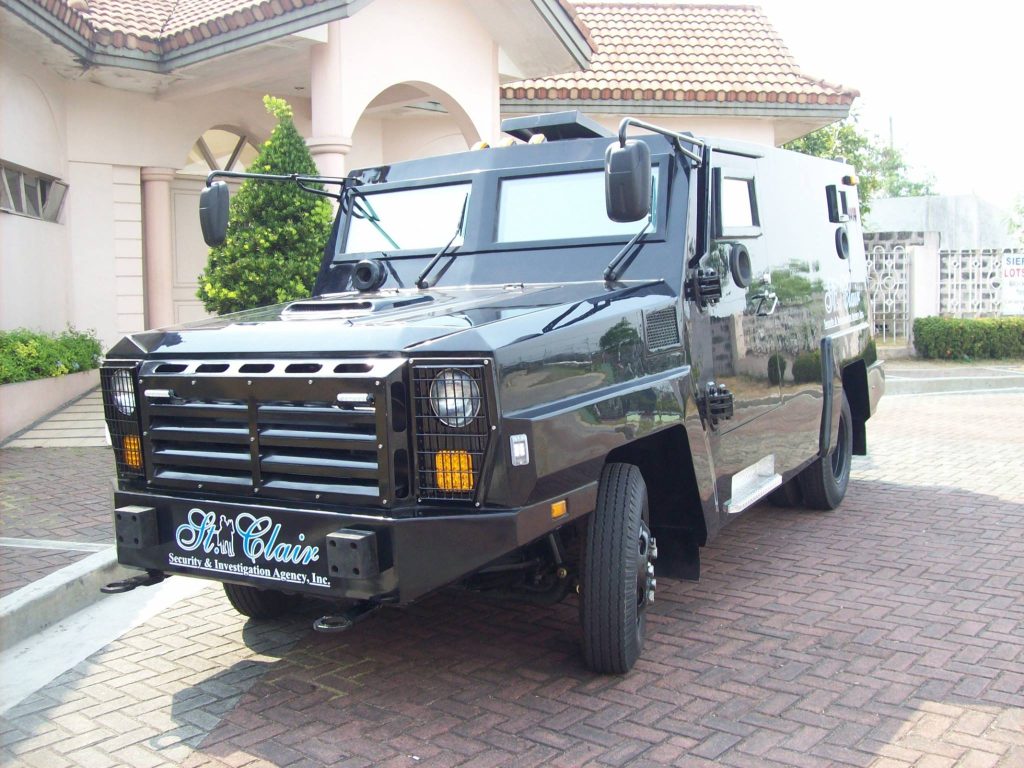
When people hear “armored vehicle,” they often imagine something simply bulletproof. But true protection is far more complex. Every armored vehicle is built to meet specific armoring levels—measured through international ballistic ratings that define how much protection a vehicle can offer against different types of threats.
Understanding these levels helps clients choose the right vehicle for their needs—whether it’s for cash-in-transit, executive protection, or military applications.
What Are Ballistic Ratings?
Ballistic ratings are standardized measurements that classify how well armor materials can stop bullets or other projectiles. These ratings are established by international agencies such as:
- NIJ (National Institute of Justice) – Used widely for bulletproof vests and vehicle armor.
- VPAM / BR Standards (Europe) – Specifies ballistic resistance for armored vehicles.
- UL 752 (Underwriters Laboratories) – Common for commercial and civilian-grade vehicles.
In the Philippines, Prado & Sons Industries, Inc. follows a combination of these international standards to ensure that each armored vehicle meets the appropriate protection level for its purpose.
Common Armoring Levels Explained
Below are the most recognized protection levels for armored vehicles in civilian and commercial use:
| Level | Threat Protection | Typical Use |
|---|---|---|
| B4 | Handguns (e.g. .44 Magnum) | Executive vehicles, VIP sedans |
| B6 | Assault rifles (e.g. 7.62×51mm NATO) | High-profile executives, diplomats |
| B7 | Armor-piercing rounds | Military, law enforcement, tactical units |
| CIT Standard | High-caliber handguns and rifles | Cash-in-transit and bank vehicles |
How Prado & Sons Determines the Right Protection Level
Selecting the right armoring level depends on the client’s risk profile and the intended use of the vehicle. Prado & Sons consults directly with clients to assess:
- Operational environment (urban vs. rural, risk-prone routes)
- Cargo or passenger value (cash, executives, sensitive materials)
- Vehicle performance requirements (speed, load, mobility)
Each project undergoes a custom engineering design process—ensuring the perfect balance between protection, weight, and comfort.
Inside the Armor: How Protection is Achieved
Armored vehicles achieve protection through carefully integrated materials and construction techniques, including:
- Ballistic steel plating on doors, roofs, and floors
- Multi-layer bullet-resistant glass with anti-spall coating
- Run-flat tires that allow escape even after damage
- Overlap joints to eliminate weak points in the structure
Each Prado & Sons vehicle goes through precision welding, sealing, and ballistic testing to meet or exceed client specifications.
The Balance Between Protection and Performance
Adding armor increases a vehicle’s weight, which can affect speed and handling. Prado & Sons engineers optimize vehicle performance by reinforcing suspensions, brakes, and drivetrain systems—maintaining comfort and drivability without compromising protection.
Why Choosing the Right Armoring Level Matters
Over- or under-armoring can both lead to unnecessary risk or cost. Choosing the correct protection level ensures that your vehicle provides adequate security while remaining efficient and reliable for daily use.
Prado & Sons helps clients achieve tailored protection, ensuring every armored vehicle delivers peace of mind wherever it travels.
Conclusion: Confidence Built on Science and Experience
Understanding armoring levels isn’t just for experts—it’s essential knowledge for anyone investing in protection. With decades of expertise, Prado & Sons Industries, Inc. combines advanced materials, engineering precision, and proven ballistic science to deliver armored vehicles that meet the highest standards of safety and performance.

